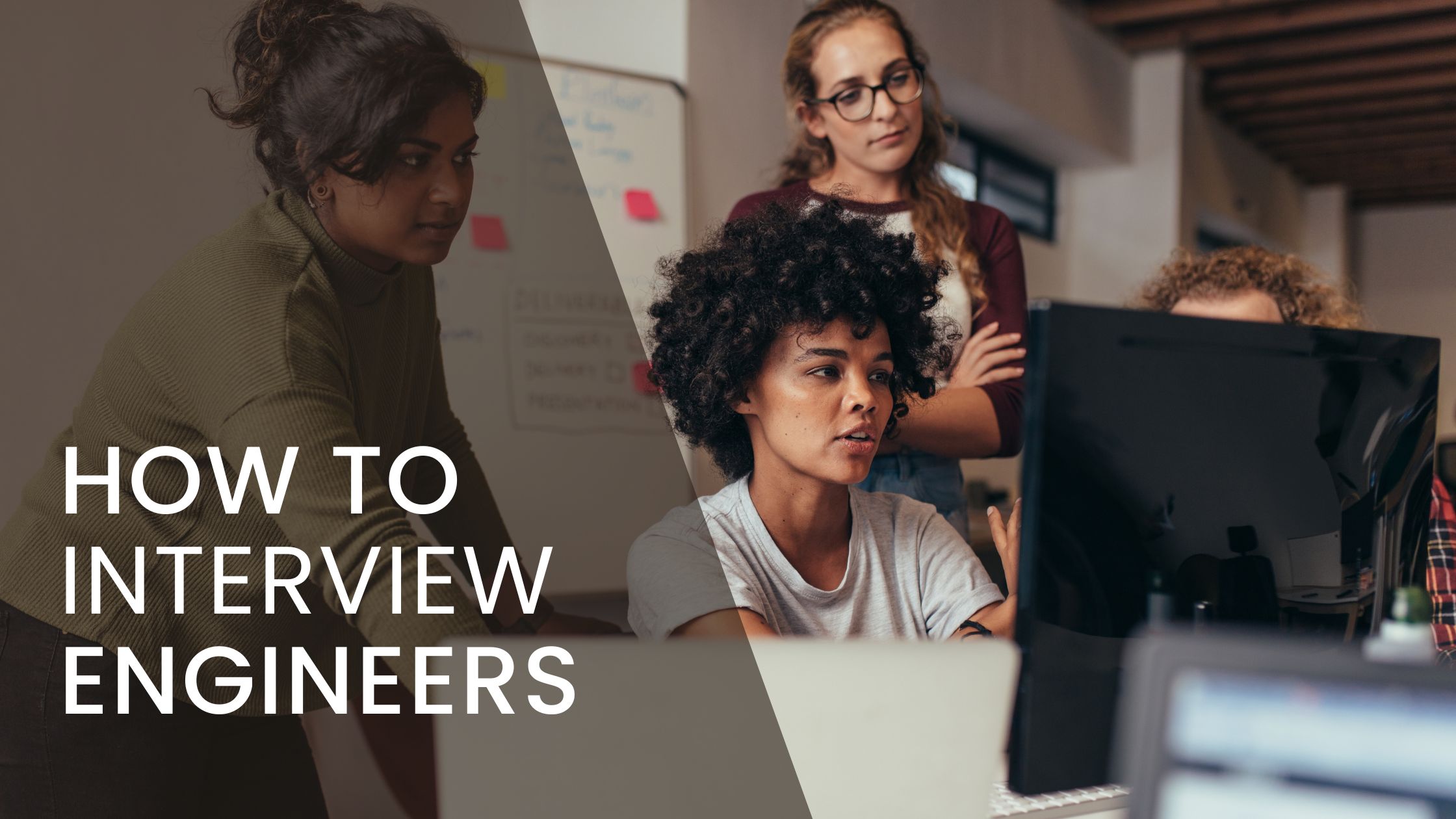
Why Great Engineers Don't Automatically Make Great Interviewers
Hiring exceptional engineers starts with asking a simple question
Are your interviews actually measuring engineering ability, or are they measuring who performs best under pressure?
Many companies assume that experienced developers naturally become effective interviewers. In reality, interviewing is its own skill. Without structure, even seasoned engineers can make inconsistent decisions based on intuition, first impressions, or unconscious bias. The result is slower hiring, inconsistent candidate experiences, and missed opportunities to hire outstanding talent.
The Problem with "Gut Feel"
Research in industrial-organizational psychology has consistently shown that unstructured interviews are less reliable predictors of job performance than structured interviews. When interviewers rely on instinct instead of evidence, they often overvalue communication style, shared experiences, or confidence while overlooking technical ability and problem-solving skills.
This doesn't mean intuition has no place in hiring. It means intuition should complement data—not replace it.
The best engineering teams evaluate candidates against predefined competencies such as coding proficiency, system design, debugging, collaboration, and communication. Every interviewer assesses the same skills using a shared rubric, making hiring decisions more consistent and easier to justify.
What High-Performing Hiring Teams Do Differently
Strong engineering organizations treat interviewing like any other engineering process: they iterate, measure outcomes, and continuously improve.
Their interview process typically includes:
- Clearly defined competencies for every role.
- Standardized interview questions aligned with those competencies.
- Structured scorecards completed independently before discussion.
- Interviewer calibration sessions to reduce scoring differences.
- Continuous feedback on interview quality.
This approach helps reduce bias while improving hiring confidence across the team.
Better Interviews Create Better Candidate Experiences
Candidates notice when an interview feels organized.
A structured interview communicates professionalism, fairness, and respect for the candidate's time. Questions feel relevant, feedback is more consistent, and hiring decisions become faster.
Even candidates who aren't selected often leave with a positive impression when they understand that everyone was evaluated against the same criteria.
That matters. Employer reputation increasingly influences where top engineers choose to apply.
Measuring What Actually Matters
Engineering leaders track deployment frequency, incident rates, and code quality. Hiring deserves the same level of measurement.
Useful recruiting metrics include:
- Interview-to-offer conversion rate
- Offer acceptance rate
- Time-to-hire
- Interviewer agreement rate
- Candidate satisfaction scores
- New-hire performance after six to twelve months
Monitoring these metrics helps identify bottlenecks and reveals whether interview performance actually predicts success on the job.
Where AI Can Help
Artificial intelligence isn't here to replace interviewers—it helps them become more consistent.
Modern interview intelligence platforms can automatically capture interview notes, generate competency-based summaries, highlight missing evidence, and reduce administrative work. Instead of relying on memory after several interviews, hiring teams can focus on observable behaviors and documented examples.
This allows interviewers to spend more time engaging with candidates and less time writing notes or debating subjective impressions.
Build a Hiring Process That Improves Over Time
The strongest engineering organizations don't assume their hiring process is perfect. They review outcomes, train interviewers, refine rubrics, and continuously improve.
Interviewing should be treated as an engineering discipline: one built on repeatable processes, measurable outcomes, and continuous iteration.
At Assess.dev, we believe technical interviews should help every candidate demonstrate their real abilities while giving hiring teams the evidence they need to make confident decisions. A structured, data-driven interview process doesn't just lead to better hiring—it builds stronger engineering teams, improves candidate trust, and creates a recruiting process that scales as your organization grows.
The best interview isn't the one that feels right. It's the one that consistently identifies the right engineers.
If you think you need help, here is what AssessDev can assist with:
- How to interview engineers without being an engineer: A self-paced course which teaches you how to design, ask, and understand technical questions, even without a technical background. Ideal for individuals.
- Tech Interviewer Training: A training for hiring managers, tech interviewers and TA professionals who finally want to elevate tech hiring in their organization. No more mis-hires, and 3+ months of interviewing.
- Structured Tech Assessments: Find our package deals here and the structure of each technical interview here.
- Embedded : Hire a tech interviewer as an extended part of your team. Get help from a CTO for every problem you encounter: getting the job specifications right, writing the job description, deciding where to post and promote the job ad, structuring the interview process, teaching the recruitment team on how to understand technical answers, and actually conducting the technical interviews.